Halloween Gifts for Coworkers Without Making Work Awkward
Share
A good Halloween gift for a coworker is small, easy to accept, and appropriate for the relationship. For one peer, a dependable choice is one observed favorite with a specific thank-you note, given privately. For a team, offer comparable options that people can choose or decline without explanation.
Keep Halloween in proportion to what you know. If a colleague has shared a love of ghost stories, puzzles, seasonal décor, or a particular café, use that real clue. If you have no reliable clue—or do not know whether they celebrate—a warm work-related thank-you can be complete without a physical gift.
Match the Halloween gift to the workplace relationship
A coworker can be a close friend, a new teammate, a manager, or someone you supervise. Those relationships do not carry the same expectations. Decide what the gesture is meant to communicate before choosing the item.
| Situation | Appropriate scale and delivery | Mismatch to avoid |
|---|---|---|
| One peer thanking another | A modest private gesture based on a shared clue | A lavish gesture that feels romantic or creates an obligation |
| Close work friends | A more specific gesture that still suits the work setting | An inside joke that embarrasses the recipient in front of the team |
| Manager giving to a team | Comparable choices, consistent eligibility, and private selection | Different gifts that can look like public rankings of employees |
| Employee giving to a manager | A voluntary group gesture with no individual spending expectation | An expensive solo gift that introduces pressure or favoritism concerns |
| Office gift exchange | An opt-in format with an agreed limit and theme | Adding people without asking or treating the limit as a target to exceed |
| Remote or hybrid colleague | A region-compatible digital option or consented delivery method | Using a home address without permission or sending a region-limited gift |
When a power difference is involved, keep the gesture especially modest. A manager can make a team gift feel fair without making every item identical: offer two or three comparable choices and let each person choose privately.
Use a four-part workplace-fit filter
Before buying, check the occasion, the relationship, the recipient clue, and the acceptance burden. If several answers are unknown, move toward a smaller and more neutral gesture.
- Occasion and workplace: Has the coworker shown that they enjoy Halloween, and does the idea suit company rules, the worksite, and the team culture?
- Relationship and scale: Is the cost and personalization proportionate to how well you know the person and to any reporting relationship?
- Real recipient clue: Is the choice based on something the coworker has used, mentioned, collected, or enjoyed rather than an assumption about age, gender, culture, or personality?
- Easy acceptance: Can the coworker accept it without needing to eat, wear, display, reciprocate, share private information, or explain a refusal? Have you checked any food, scent, alcohol, humor, size, and delivery concerns?
A useful item with a removable seasonal tag is often lower-pressure than an object that must become part of the coworker’s desk, wardrobe, or home. When the preference signal is weak, reduce the commitment rather than adding more items.
Choose from ten complete Halloween gift ideas for coworkers
Each idea needs a real recipient clue and a clear stopping point. Choose one complete direction rather than combining several into a larger basket.
- A known-favorite break: Pair one packaged snack, tea, or coffee the coworker already chooses with a note thanking them for a specific contribution. Skip food when you cannot confirm preferences, and keep the original label available.
- A café break together: Give a modest credit for the café the coworker already visits and suggest two flexible times to go together. This suits a friendly peer relationship; skip it if a one-to-one invitation could be misread or difficult to schedule.
- An October reading pause: Combine a bookmark that fits a known genre with a small credit for the bookstore the recipient uses. Name the shared clue in the card, such as their interest in gothic fiction or mysteries, and do not guess at a specific book they may own.
- A pocket-size puzzle break: Choose one compact puzzle or card game for a colleague who already enjoys them, then add a removable Halloween tag. Check whether its use would create noise or require workplace display; if so, choose another format.
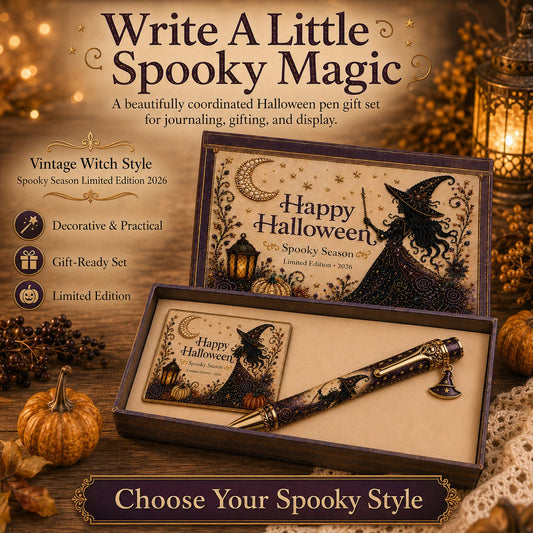
- Everyday stationery with an October detail: Select a notebook or pen in the format and style the coworker already uses, then add a small illustrated card. Keep the message about appreciation rather than organization, productivity, or stress.
- One compact décor accent: For a colleague who actively collects Halloween décor, choose one small piece that matches their known cute, gothic, classic, or playful style. Confirm display and storage preferences first; décor is not a neutral fallback.
- A manager-to-team pick-one menu: Offer a café credit, a notebook, or a small puzzle at the same general value and let people choose privately. Include a decline option and do not ask anyone to explain their selection.
- A group thank-you for a manager: Coordinate one card with a concrete appreciation sentence from each willing participant. The group message is the gift; no employee needs to add money or buy a separate item.
- An office-exchange anchor: Stay within the agreed limit and give one useful item, such as a notebook with a seasonal pen, a compact game, or a bookshop credit. Use the wrapping for Halloween flair instead of filling the package with unrelated miniatures.
- A remote-friendly surprise: Send an e-card with a credit for a service that works in the coworker’s region, or mail one compact interest-based item after confirming the delivery method. A digital version should be equally complete, not a lesser backup.
If none of these ideas has a reliable recipient clue, stop at a specific thank-you note. That is a finished gesture, not a failed attempt at gifting.
Make whole-team Halloween gifts fair and optional
Before ordering, define the eligible group with one consistent rule that follows employer policy. Account for remote teammates, different shifts, temporary team members, and anyone who will not be present on the main office day. Comparable access matters more than making every person appear to participate.
- Offer choices privately. Food, non-food, and digital options can share the same general scale without putting personal needs on display. Keep labeled food and non-food selections separate.
- Keep participation optional. Do not require a reason from someone who declines a Halloween item, activity, costume, or exchange.
- Use one consistent limit. A defined range keeps a team exchange playful and reduces pressure to compete.
- Separate appreciation from performance. A seasonal gift should not look like a substitute for recognition, compensation, or feedback.
- Give selective peer gifts discreetly. If one colleague is receiving a personal thank-you, a private handoff avoids turning it into an unintended team comparison.
A team gift can be modest and still feel personal. Pair each comparable choice with a one-sentence note about a real contribution, such as helping with a difficult handoff or making a new teammate feel welcome.
Adapt Halloween gifts for remote and hybrid coworkers
Remote gifting adds privacy, location, and timing questions. Ask the recipient whether they prefer a digital gift, delivery to an approved address, or no gift at all. Follow the company process for personal information rather than collecting home addresses in a shared spreadsheet or group chat.
For a digital gift, confirm that the service works where the recipient lives and is something they already use. For a mailed gift, confirm that the colleague can receive parcels and give enough lead time for the item to be useful before the planned celebration. Do not make the recipient solve a delivery problem to receive a small seasonal gesture.
A shared online activity can be the gift when the team already enjoys that format. Keep the timing reasonable across time zones and provide an easy opt-out. A calendar invitation marked as mandatory turns a light seasonal idea into another work obligation.
Take a second look at six popular coworker gifts
Many familiar Halloween gift ideas work only when you know the recipient or the workplace well. Check the hidden commitment before deciding.
| Gift idea | Why it can miss | Lower-risk direction |
|---|---|---|
| Candy, baked goods, or snack baskets | Ingredients, dietary choices, sharing expectations, and storage may be unknown | Ask first, retain the original ingredient label, and let the recipient decide whether the product suits them; otherwise choose non-food |
| Candles, room fragrance, or personal care | Scent and skin preferences are personal, and open-flame items may not suit the workplace | Skip this category in ordinary coworker gifting; if the exact product was requested for home use, follow the current manufacturer instructions |
| Mugs, tumblers, or desk décor | The coworker may already own enough or may not want to display a seasonal item | You know the object fills a need and fits their space and style |
| Alcohol | Personal choices, beliefs, health considerations, and workplace rules may be unknown | Skip alcohol as a workplace gift; a separate gift within a private friendship is outside this guide |
| Apparel, jewelry, or costume accessories | Size, dress codes, personal style, and the expectation to wear it create pressure | A close work friend has requested or identified the exact item |
| Pranks, jump scares, or graphic horror | Surprise can become discomfort, disruption, or embarrassment | Skip the scare and use benign, non-startling humor in a removable card or tag |
When an idea needs several exceptions to become suitable, choose another idea. The recipient should not have to manage the risk created by the gift.
Use presentation and wording to keep the gesture light
Simple packaging can create the Halloween mood without adding clutter. Use a removable tag, seasonal colors, or a small illustrated card. Skip loose glitter, confetti, elaborate wrapping that must be stored, and anything designed to startle the recipient.
A short note should explain the reason for the gesture and signal that no reciprocal gift is expected. Adapt one of these messages to the real relationship:
- Peer thank-you: “A small October thank-you for making the project handoff so much easier. No need to return the favor.”
- Known interest: “This reminded me of your love of ghost stories. I hope it adds a little fun to your October.”
- Team choice: “Please choose whichever small food or non-food option suits you. Joining in is completely optional.”
- Remote colleague: “May I send a small Halloween surprise? Digital is completely fine if you would rather not share a delivery address.”
A clear message can reduce ambiguity about whether the gift is personal, romantic, managerial, or part of an exchange.
Use the confident default when the choice is unclear
For one peer you know, choose one observed favorite and add a specific private thank-you. For a team, use a private pick-one menu with comparable options. When there is a reporting relationship or too little recipient information, scale down to a group card or a brief work-related note.
If seasonal décor is a known interest, you can compare directions in Niceovo’s Halloween collection, then confirm the current item details and the coworker’s display and storage preferences. If décor is still a guess, choose a year-round item and add a seasonal note.
A lower-pressure workplace gesture connects to a real clue, fits the relationship, and leaves the recipient free to enjoy it on their own terms.